Textiles and embroidery
In the Scenes from the Life of Saint Francis, textiles play a central role. A closer look reveals that Giotto gives fabrics and hangings the same careful attention as faces and architecture.
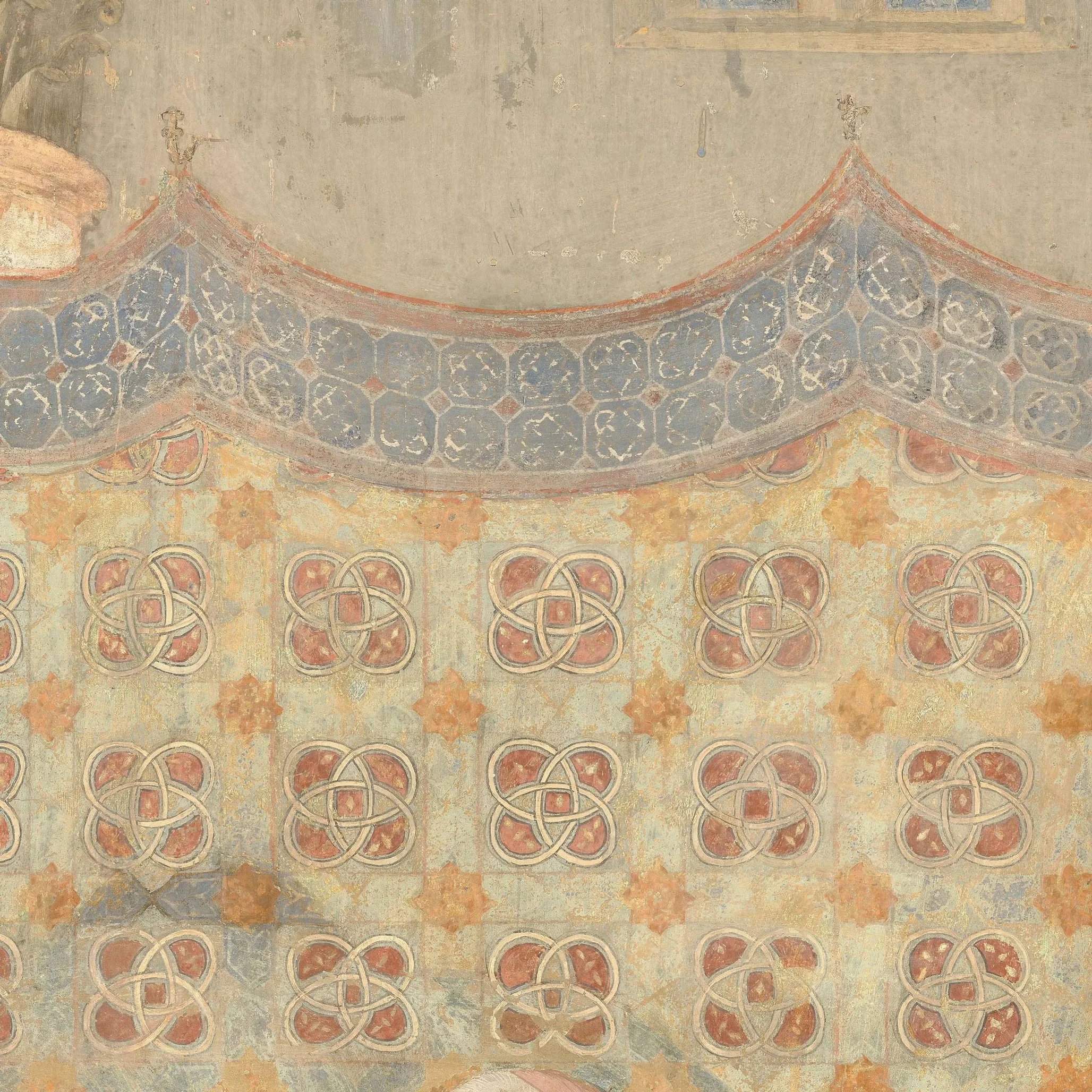
The ultra-high-resolution images make this particularly striking. The surfaces are filled with geometric motifs, rosettes, interlacing patterns and decorative sequences, combining remarkable precision with freedom of design.
Seen side by side, these details reveal a careful balance between observation and invention. On the one hand, Giotto closely observes real fabrics, capturing their texture and weight, as well as the way they hang, fold and stretch. On the other, he creates decorative surfaces with a visual language of their own, built around rhythm, repetition and variation.
It is this combination that makes them feel so immediate to the modern eye. Seen up close, some of the motifs seem almost to anticipate visual principles we now associate with design: repeating modules, expanding patterns and geometries that organise the surface.
How textiles shape space
In the Confirmation of the Rule and Saint Francis Preaching before Honorius III, Giotto creates two interiors conceived along similar lines, defined by a strong architectural framework and by large hangings that enclose the space. Architecture and textiles work together to give structure and order to each scene.
The interior of the Confirmation of the Rule feels solid and solemn. The vaults above, supported on corbels, give the space a clear structure that is echoed in the arrangement of the figures below. Yet beneath this architectural framework, the walls are completely covered by a large decorated hanging stretched across the entire background.
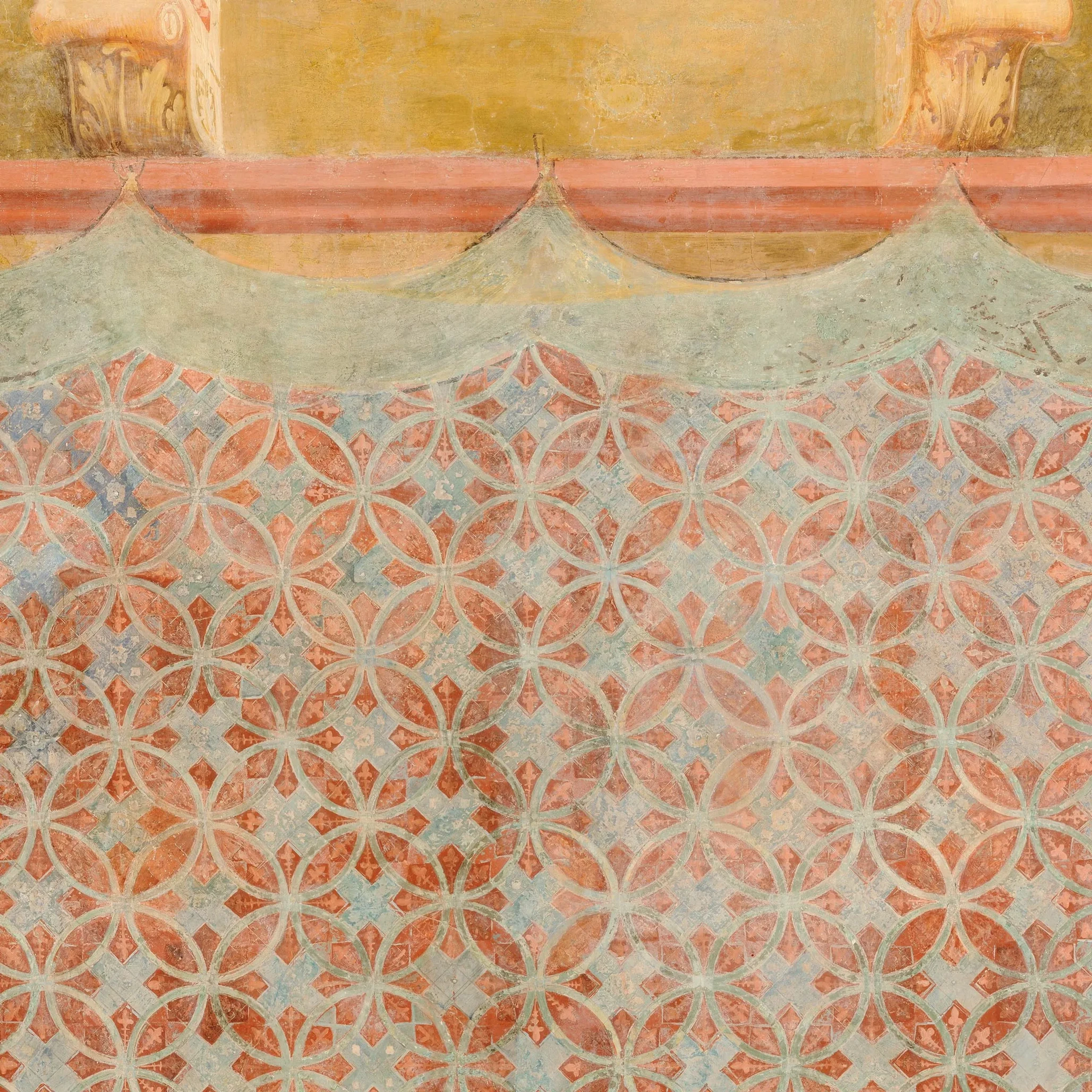
The fabric effectively takes the place of the wall, creating a continuous backdrop patterned with red circles and blue crosses. Its dense, repeating design forms a uniform surface that sets off the figures while also helping to establish the scale of the room. The architecture defines the space above them, but at the level of the figures, it is the textile that determines the character of the interior.
In Saint Francis Preaching before Honorius III, the role of the textiles becomes even more apparent. The hall opens beneath star-studded groin vaults supported by slender columns, while a hanging running along the walls adds movement through its elegant circular motifs. The result is an intimate yet sumptuous interior, appropriate to the presence of the Pope and his court. Together with the decorated throne, the rich textile patterns signal the status of the setting and reinforce the formality of the occasion.
The hangings are not simply decorative. They help define the space, enclosing the walls, focusing the eye and containing the action within a controlled and solemn interior.
Textiles and the private interior
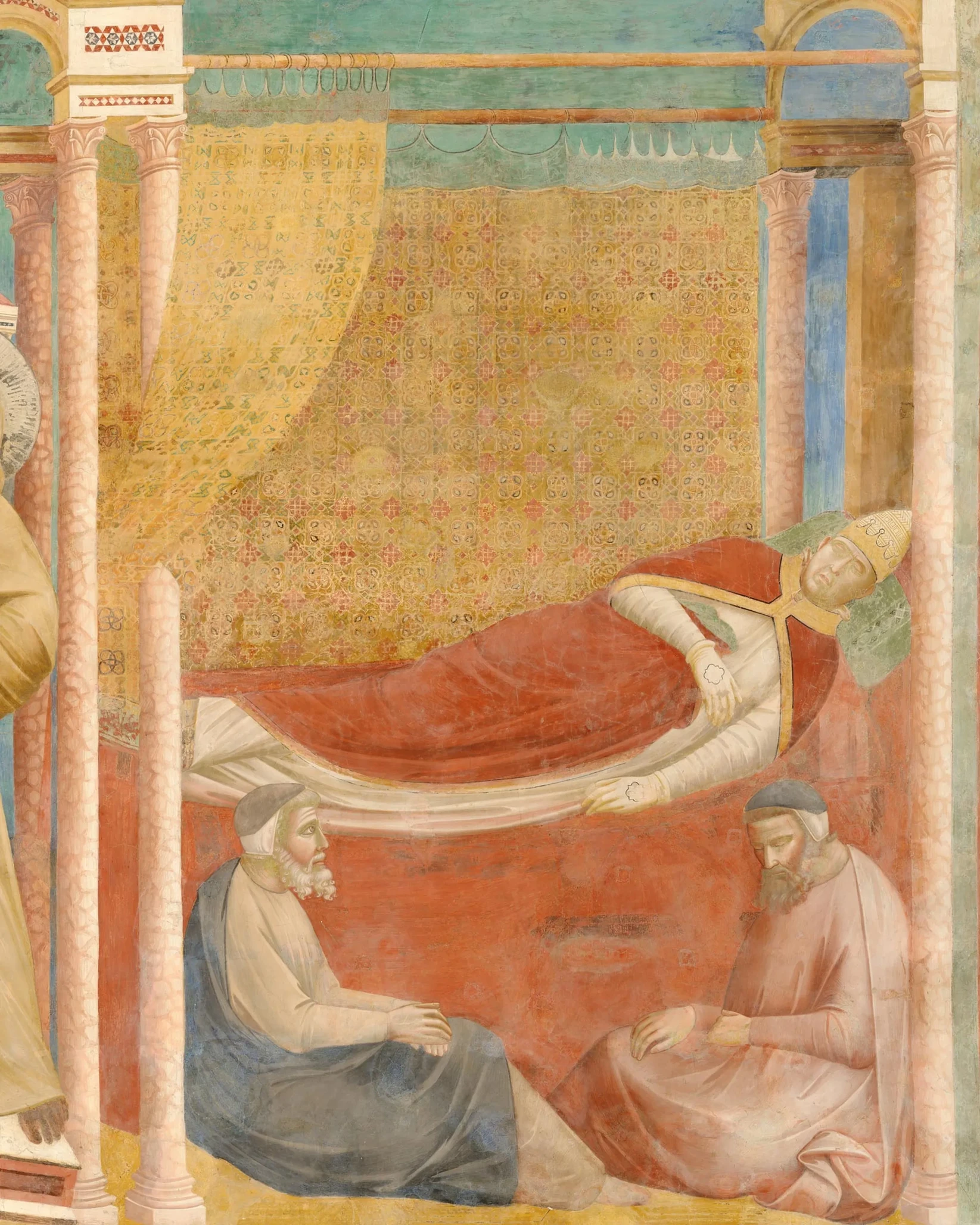
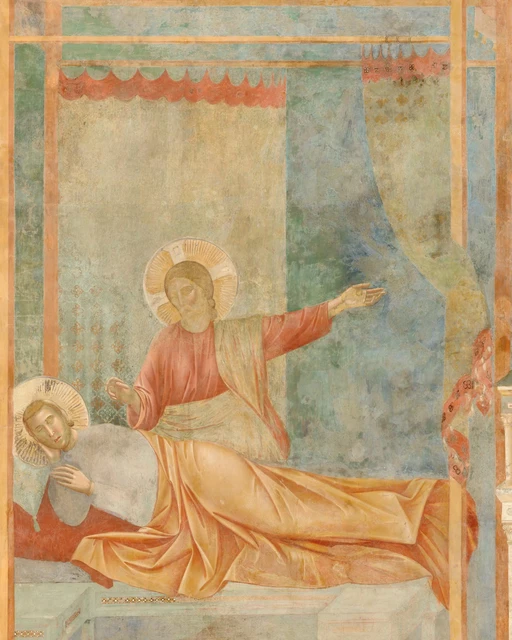
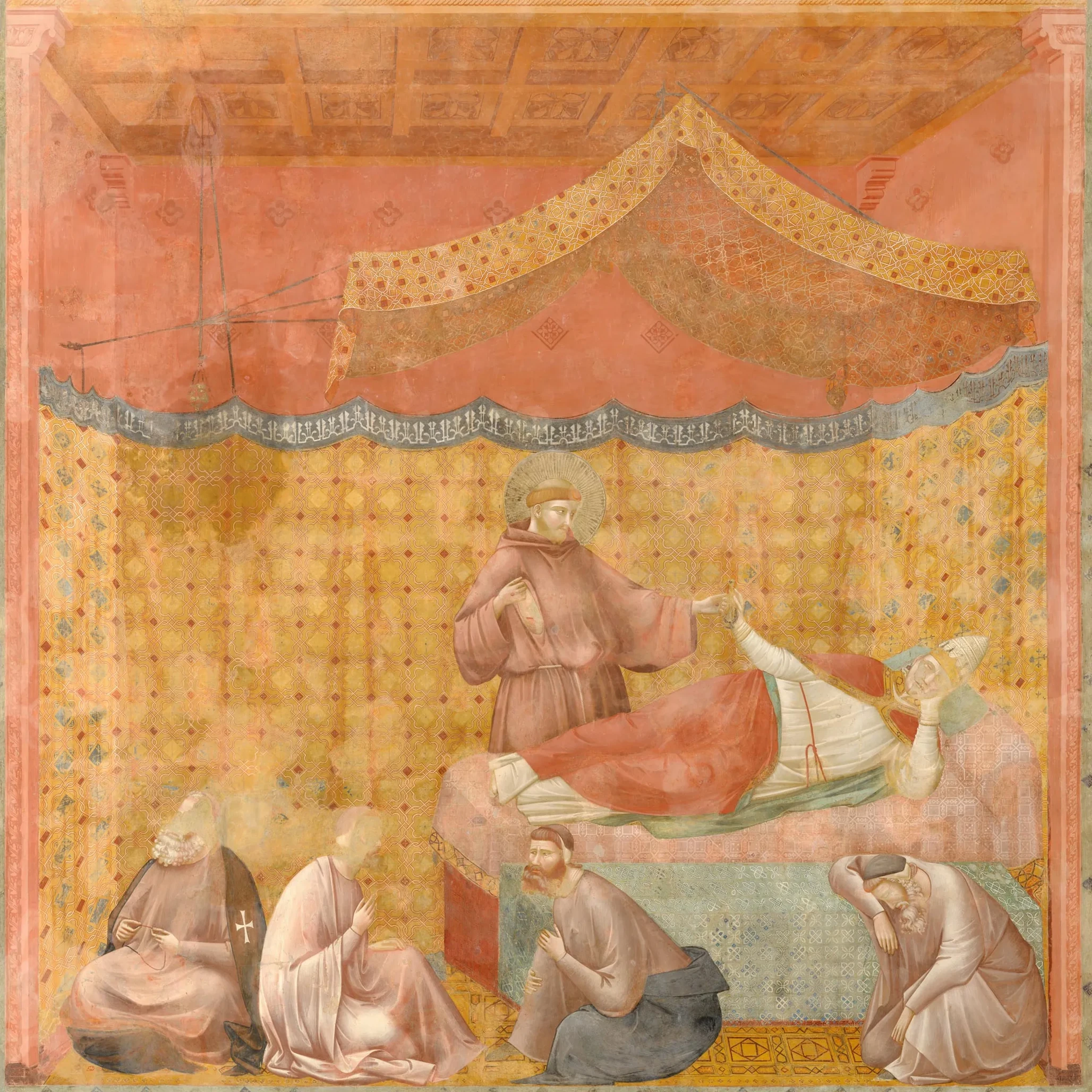
In other scenes from the Scenes from the Life of Saint Francis, textiles help create more intimate settings, particularly when the narrative moves away from the public world of the city or the grandeur of monumental architecture. In dreams, visions and apparitions, curtains and hangings enclose the setting and separate it from the world outside
This is particularly clear in the Dream of Innocent III and the Dream of the Palace. The bed, the fabrics around it and the textile backdrops mark out the boundaries of the private interior. The vision unfolds within an enclosed, protected space, set apart from the world beyond by its curtains.
In the Apparition to Gregory IX, this idea is taken even further. The interior is defined almost entirely by textile hangings and the canopy, which cover the walls and enclose the space around the bed. Rather than opening up the room, the fabrics make it feel intimate and sumptuous, perfectly suited to an event taking place in private.
In these scenes, textiles function almost like a form of soft architecture, defining the space through their folds, surfaces and decorative patterns.
The architectural role of textiles
Without these textiles, many of the scenes would lose an important part of their structure.
They enclose interiors, establish their scale and create backdrops that are never merely decorative. They also convey social status, suggest the nature of the setting and help us understand what kind of space the figures inhabit.
Seen up close, these details reveal just how much Giotto’s work depends on the physical qualities of surfaces and materials. Elements that may at first seem incidental prove essential to the way the entire image holds together.