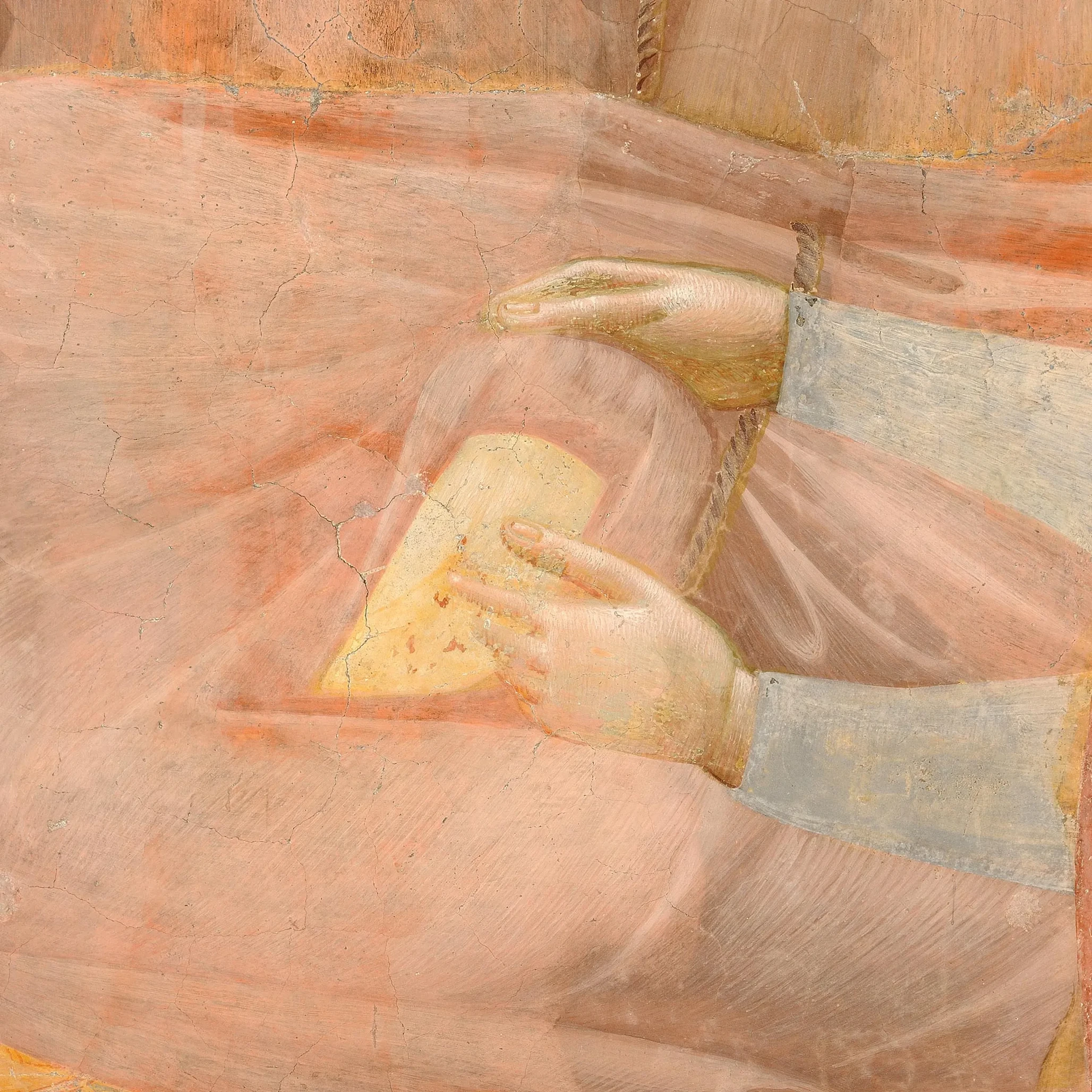
Giotto’s gestures: hands and bodies that tell the story
In the Scenes from the Life of Saint Francis, Giotto uses gestures to make the narrative immediately clear.
Hands point, offer, restrain, open and close, helping us understand what the figures are doing and how they relate to one another. Through these gestures, the sacred story takes on a tangible, human dimension.
Homage of a Simple Man: a gesture that foreshadows what is to come
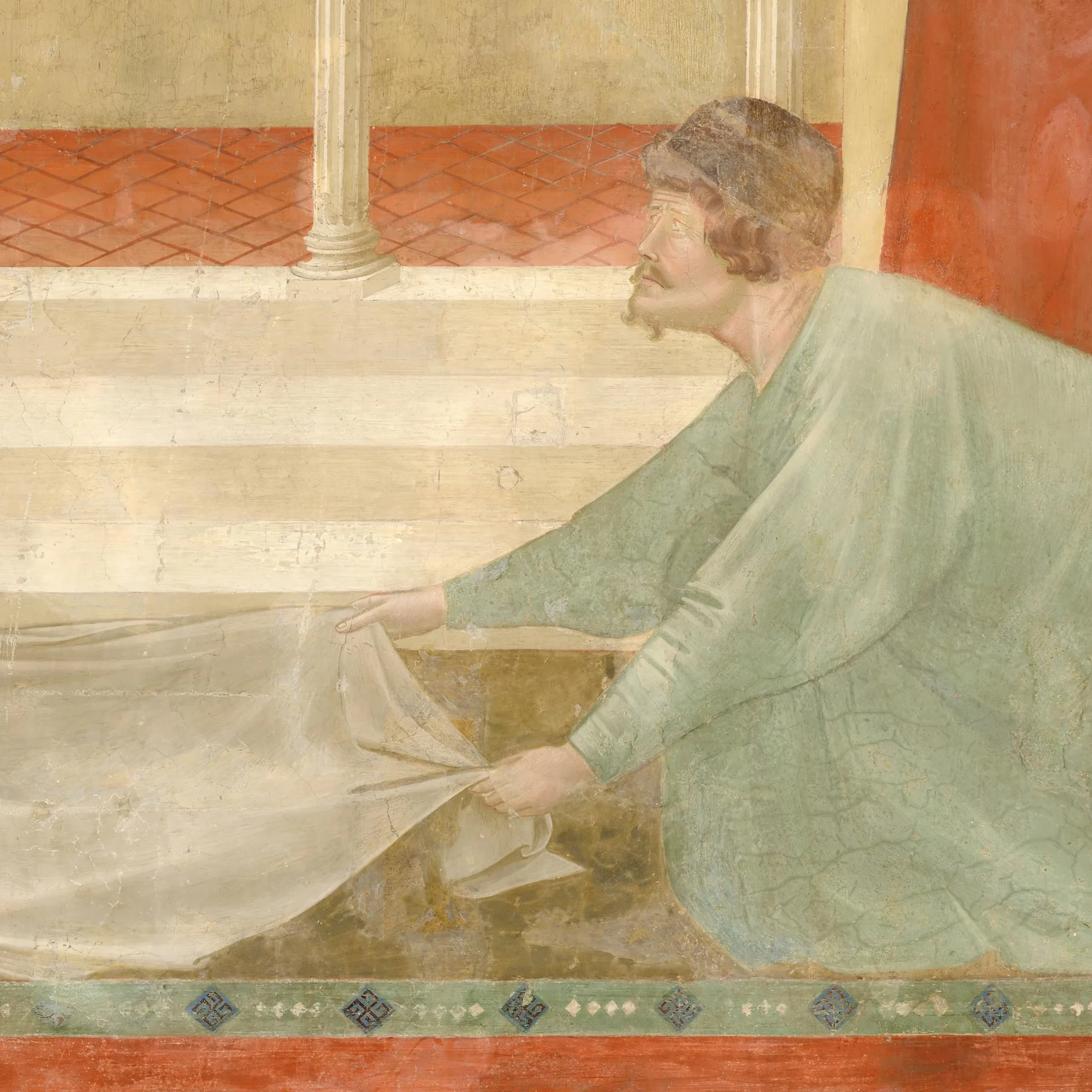
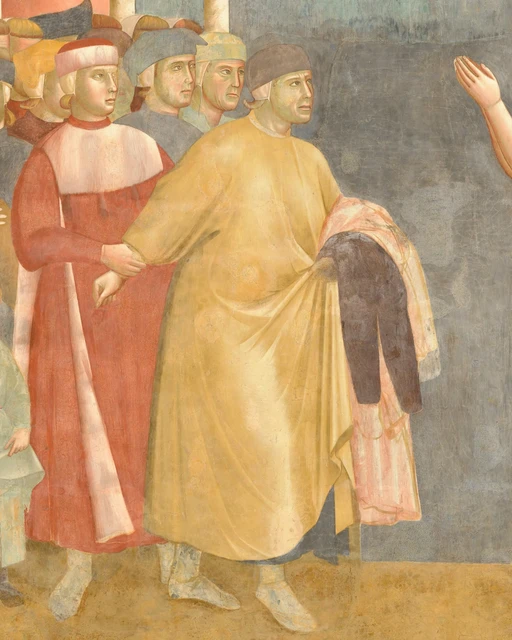
In the Homage of a Simple Man, everything centres on a single, understated movement. The man bends down and lays his cloak in Francis’s path. The gesture unfolds close to the ground and remains self-contained within the square, without drawing in those around him
Seen up close, the relationship between the man’s bent body and the cloak spreading across the ground becomes particularly clear. His hands guide the movement, spreading the fabric and carefully laying it down before Francis.
The gesture anticipates what is to come because it takes place while Francis is still part of ordinary city life. He has not yet made the choice that will transform his life, and those around him behave simply as passers-by. The man laying down his cloak recognises something before anyone else does and acts on it: the future course of Francis’s life is already foreshadowed here, made visible through a single gesture.
Saint Francis Giving his Mantle to a Poor Man: a gesture of transition
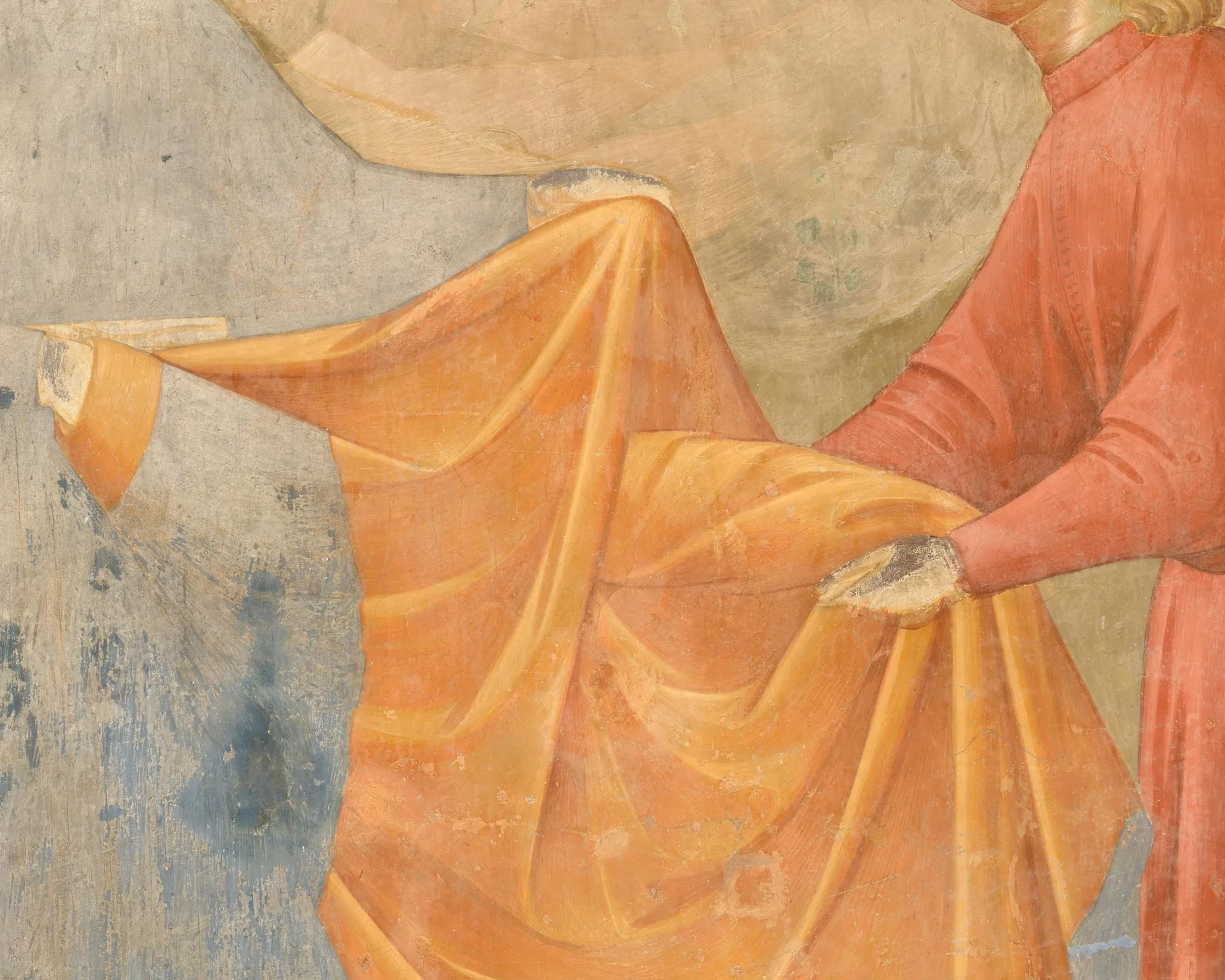
In Saint Francis Giving his Mantle to a Poor Man, the action centres on the point of contact between the two figures. Francis holds out his cloak, and the whole movement is focused on the moment it passes from one pair of hands to the other.
Seen up close, the weight of the cloak becomes almost tangible as the two men hold it between them.
As the cloak passes from one figure to the other, Francis’s role in the story changes with it. He is no longer simply present within the scene: he now acts, stepping forward to help someone in need.
Renunciation of Worldly Goods: gesture as opposition
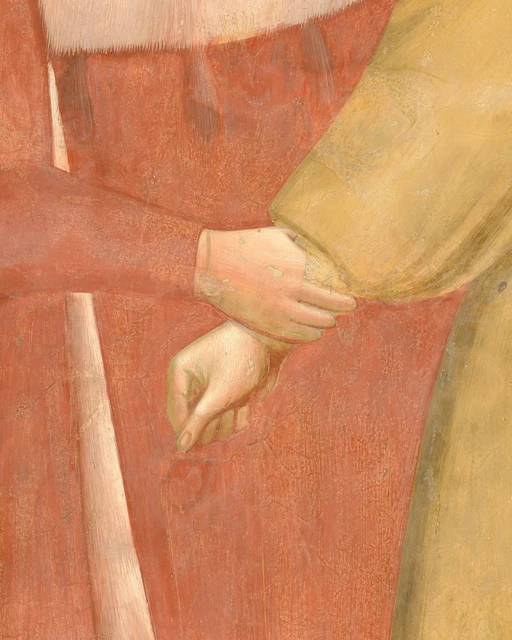
In Renunciation of Worldly Goods, the gestures of father and son are set in stark contrast.
Francis remains still, his hands joined in earnest prayer, his fingers resting gently together without tension. His upper body neither leans forwards nor reacts. Everything is restrained, as though the decision has already been made and needs no further assertion.
Opposite him, his father reacts with his whole body. One arm is drawn back as he tries to surge forwards, but the movement is checked at the very height of its tension. His hand closes, his fingers tighten and his wrist stiffens. His whole body follows the same impulse, pressing forwards towards confrontation.
The scene depends on this contrast. On one side, a restrained gesture; on the other, a movement that opens out and projects into the surrounding space. The opposition becomes immediately clear in the details of the arm and hand.
Expulsion of the Demons from Arezzo: the gesture that drives them out
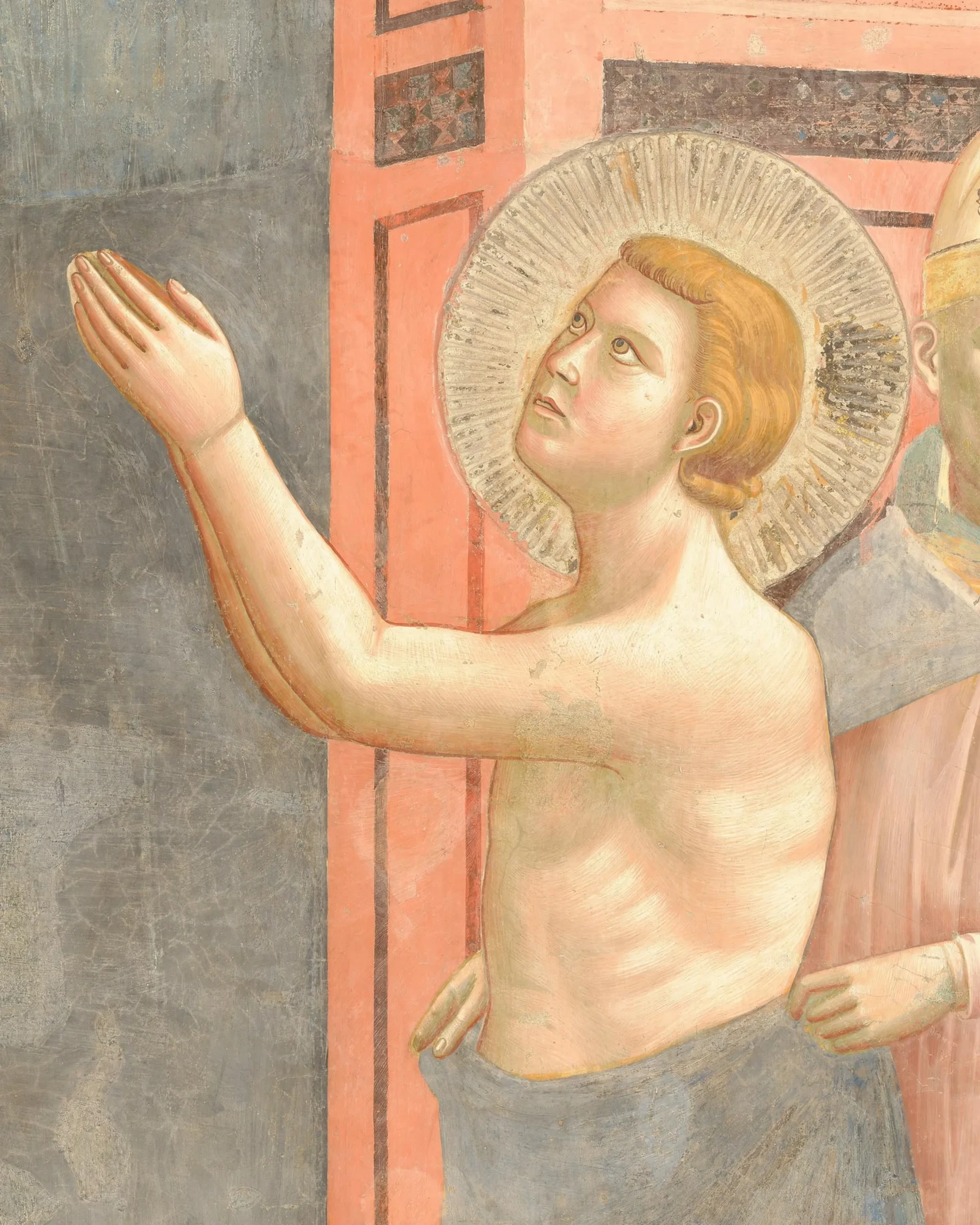
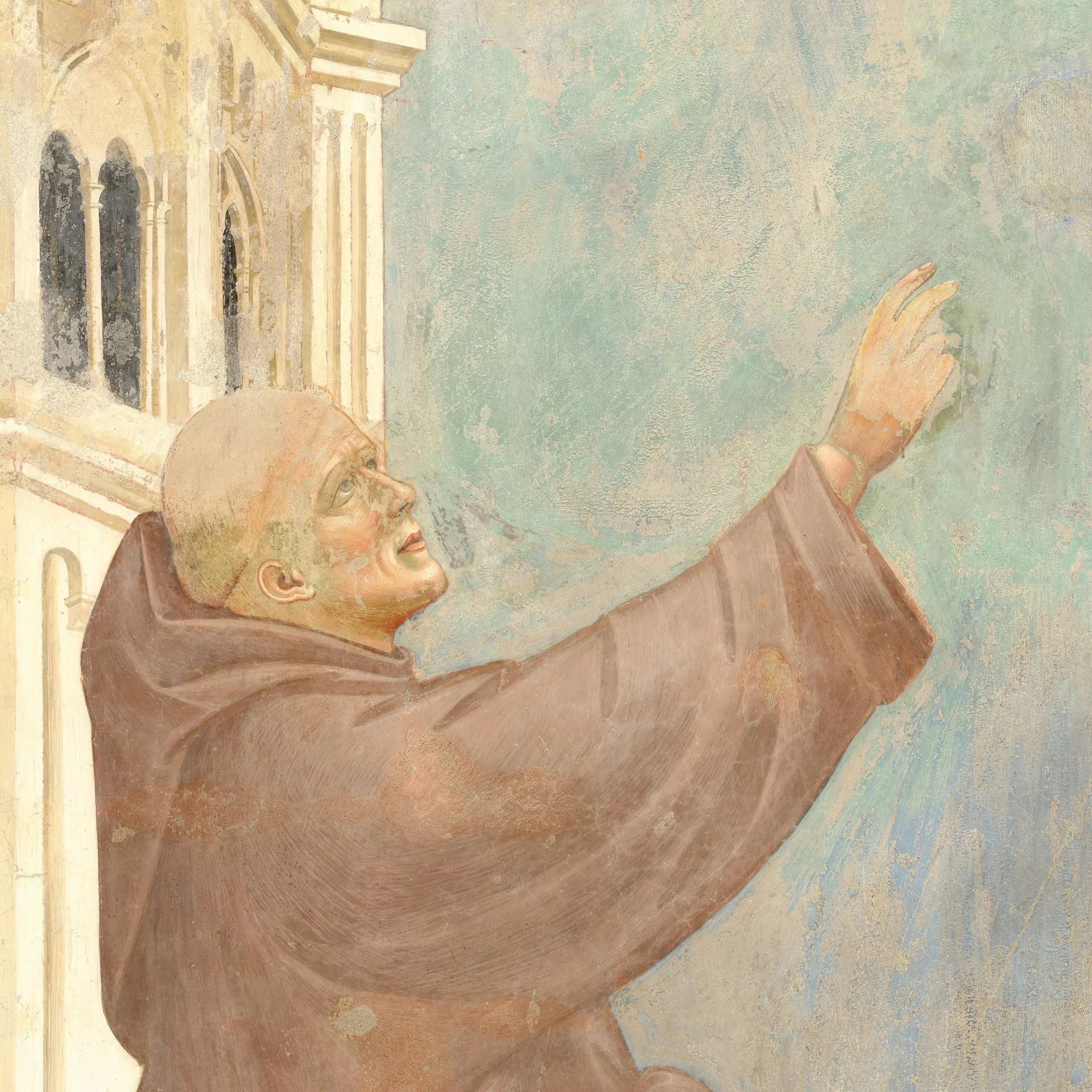
In the Expulsion of the Demons from Arezzo, everything centres on a single gesture. Brother Sylvester raises his hand towards the city, and the entire action seems to flow from that movement.
The gesture is simple and direct. His arm rises, his hand opens and points decisively towards the city. Seen up close, its clarity becomes striking: it is a movement designed to be understood at once.
Above the city, the demons react to his gesture of blessing and flee. His raised hand connects what is happening below with the movement above, bringing the whole scene together.
Saint Francis Preaching before Honorius III: gesture as speech
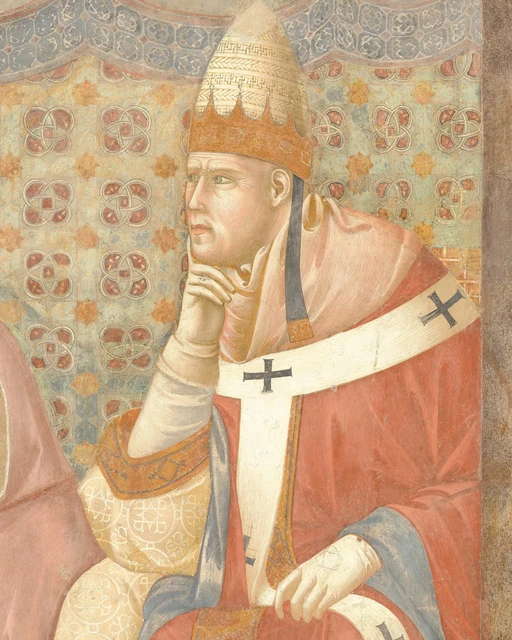
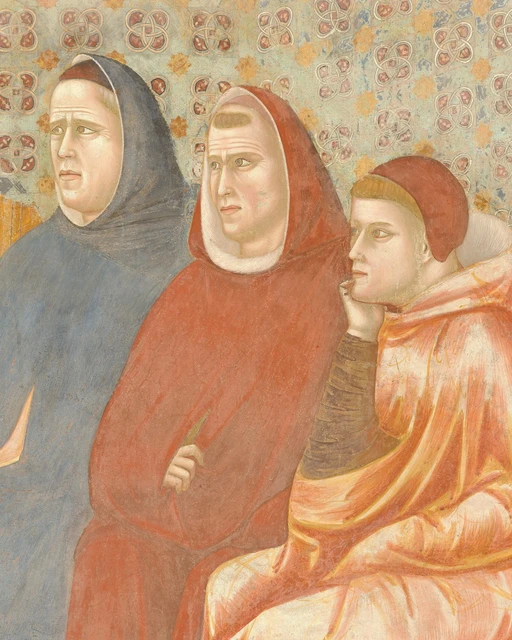
In Saint Francis Preaching before Honorius III, different gestures make the relationship between Francis, the Pope and the cardinals immediately clear.
Francis stands before them and speaks. The most striking gesture is made with his right hand: as he addresses the court, his thumb points back towards himself. The raised hand identifies him as the speaker and lends emphasis to his words. Through this simple movement, Giotto gives visual force to Francis’s speech, allowing a silent image to suggest the act of speaking.
In front of him, the Pope responds with an equally telling gesture.
Seated and leaning forwards, he rests his chin on the back of his gloved hand. His pose conveys attention and concentration: his body draws in and his gaze remains fixed on Francis. Around him, the prelates respond in different ways. Some appear almost drowsy, while others watch closely, creating a range of reactions that makes the act of listening visible.
On one side is the gesture that accompanies and reinforces speech; on the other, the gesture of someone receiving and absorbing it. It is through this exchange that Giotto makes the spoken word almost tangible.
Stigmatisation of Saint Francis: the gesture of acceptance
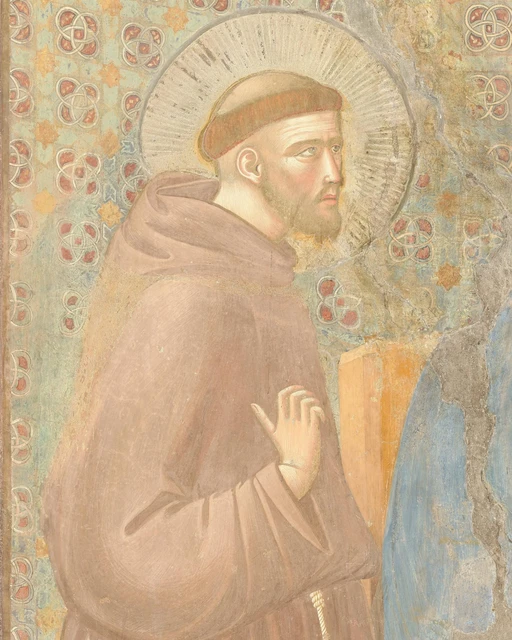
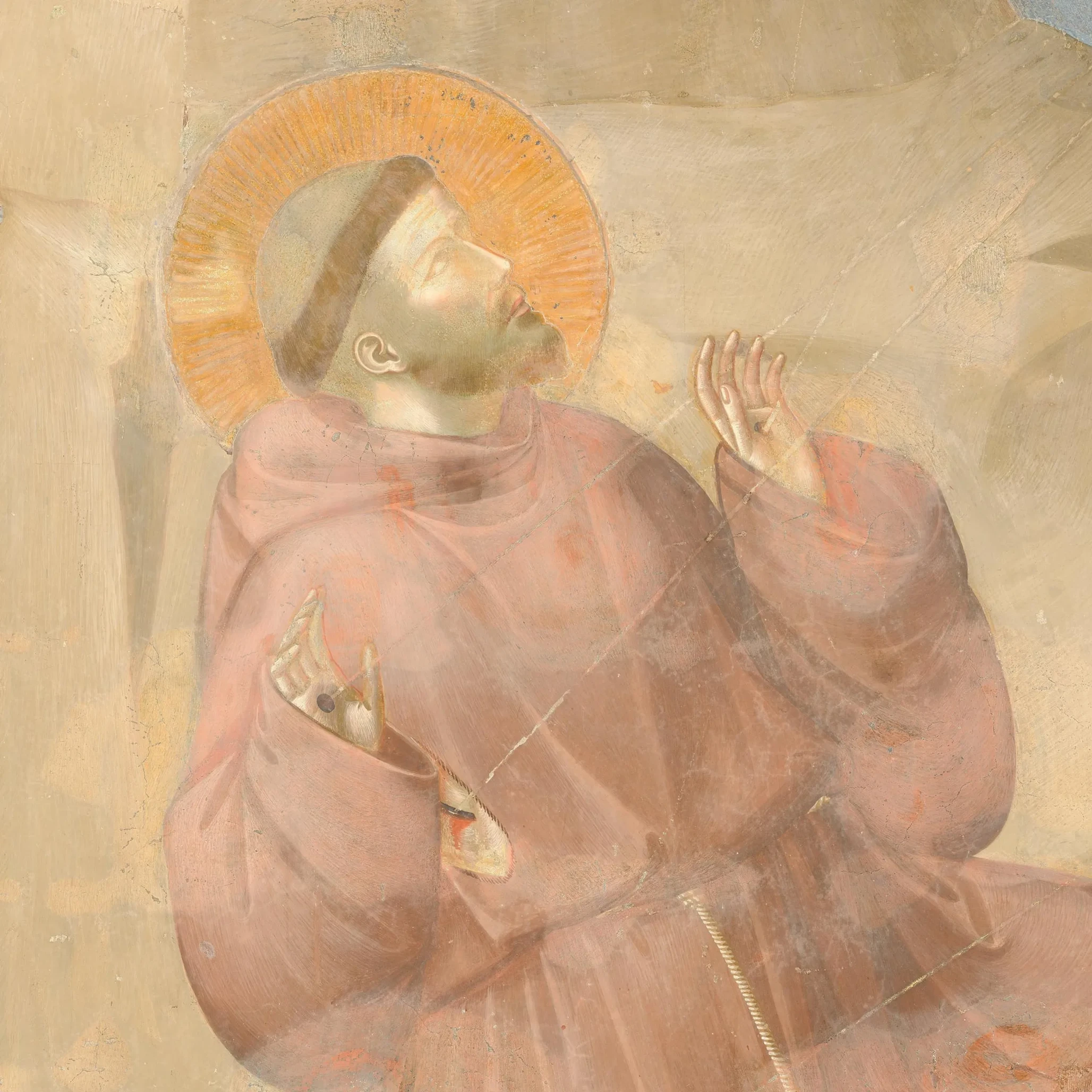
In the Stigmatisation, Francis kneels on the rock of La Verna, his body turned upwards.
Christ appears before him in the form of a seraph, sending rays towards his hands, feet and side.
The gesture is expressed through Francis’s whole posture. He leans slightly backwards, his arms open and his hands exposed to the rays descending from Christ.
The movement follows a diagonal that connects the figure above with Francis below. Everything converges on his hands and body as he receives the Stigmata.
Death and Ascension of Saint Francis: gestures around the body
In the Death and Ascension of Saint Francis, gesture is no longer concentrated in a single figure but spread among those gathered around the Saint.
Francis’s body forms the centre of the composition, while around him each friar approaches with a particular purpose.
One lifts the Saint’s hand to examine the Stigmata. Another bends down to kiss the wound on his foot. Others draw close to his face for one last glimpse of the Poor Man of Assisi.
Seen up close, these points of contact become particularly vivid: fingers supporting a hand, a face drawing closer, a head tilted to see more clearly. Every movement is directed towards Francis’s body, establishing a physical connection with it.
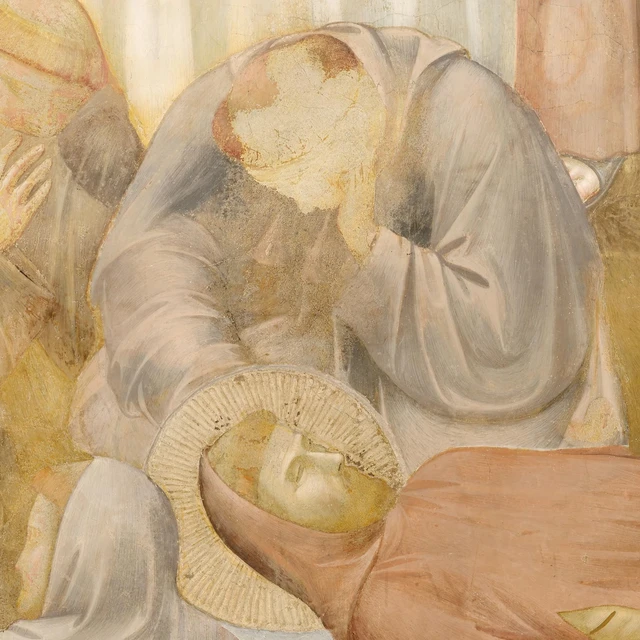
Verification of the Stigmata: a gesture of scrutiny
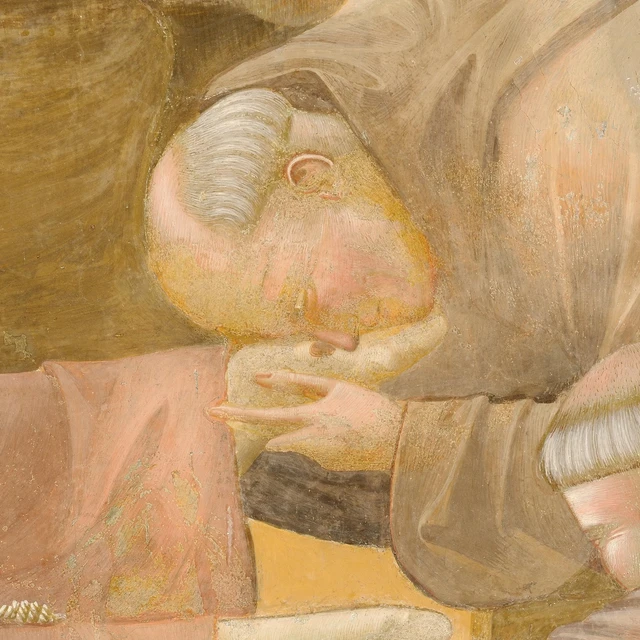
In the Verification of the Stigmata, the entire scene revolves around one precise action.
A man bends over Francis’s body to examine the wound in his side. He draws back the habit, reaches towards the wound and touches it. His index finger probes the mark, seeking tangible confirmation of what he sees.
The gesture is deliberately clear and unequivocal. It does more than touch the surface: the finger probes the wound itself. Around him, the other friars press closer, their eyes drawn to the same point.
This moment is different from many others in the cycle. Here, what matters is confirmation. The mark on Francis’s body is examined before the others through a gesture that searches, touches and makes what is being verified unmistakably visible.