Giotto’s faces
In the Scenes from the Life of Saint Francis, the faces bring us closest to the emotions of the story. Giotto creates each expression from a few carefully observed details: the eyes, the mouth and the lines of the face are enough to make both the emotion and the relationships between the figures immediately clear.
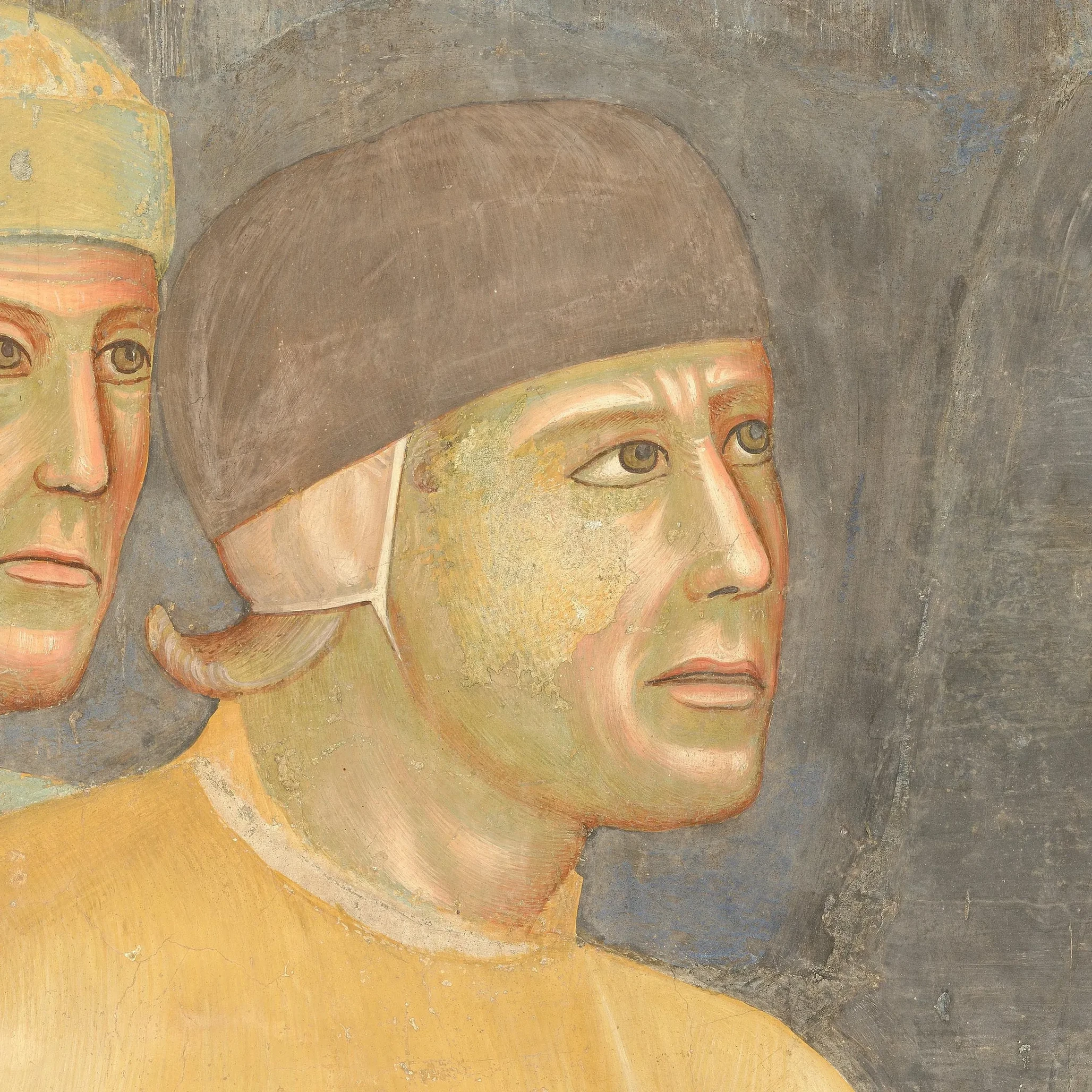
The simple man: the face of recognition
The simple man bows his head, but looks upwards towards Francis.
His face is thoughtful and deeply lined, his mouth closed. Seen up close, the intensity of his gaze becomes striking: his eyes remain fixed on Francis, establishing a direct connection between the two figures.
Around him, the passers-by continue their conversation. The simple man is the only one to look directly at Francis and the only one who seems to recognise in the young man the saint he will one day become.
The father: the face of anger
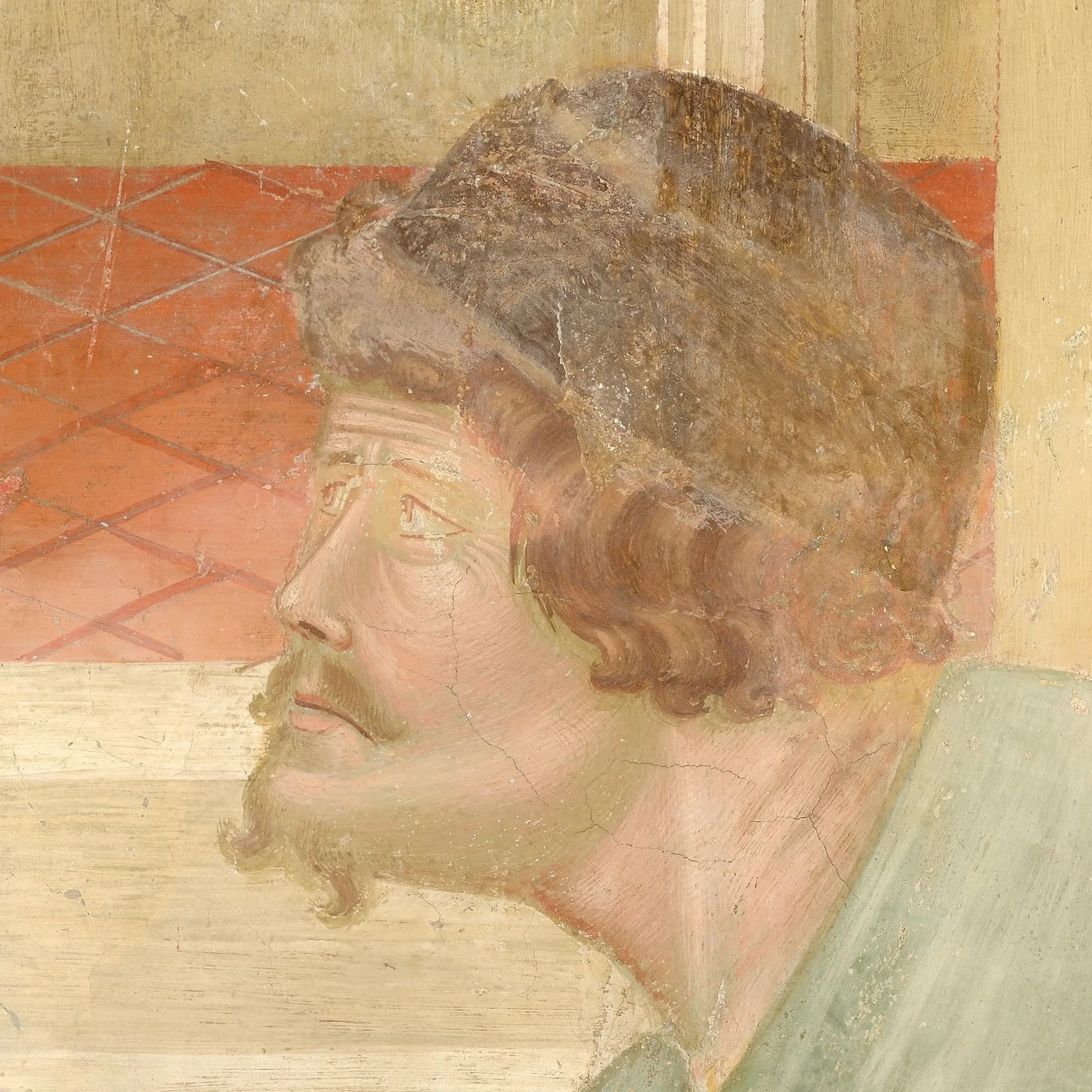
In the Renunciation of Worldly Goods, the tension of the entire scene is concentrated in the father’s face.
His eyebrows are lowered and drawn together. His stern gaze remains fixed on Francis. His lips are tightly set, as though he were struggling to contain his anger.
Deep lines of tension form around his nose, eyes and mouth. Giotto uses them to sharpen the expression and give it greater force. The face follows the forward thrust of the body and intensifies its movement, as though the impulse to strike had been caught and held at that very instant.
Arezzo: the face of the demon
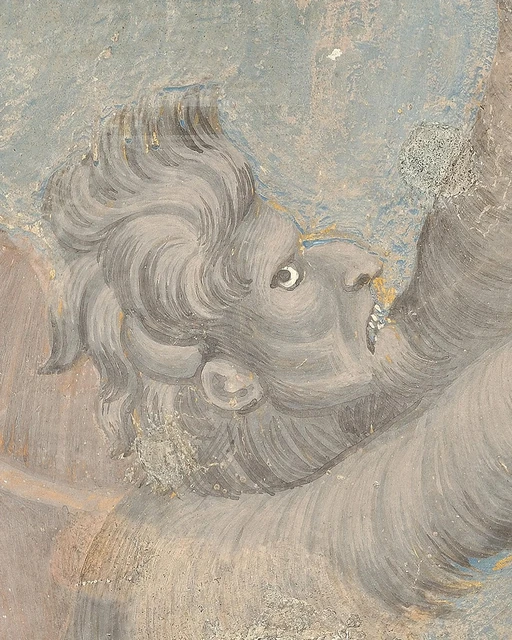
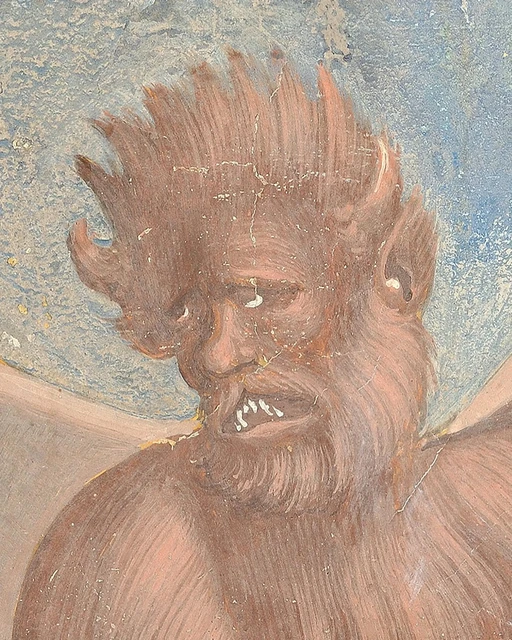
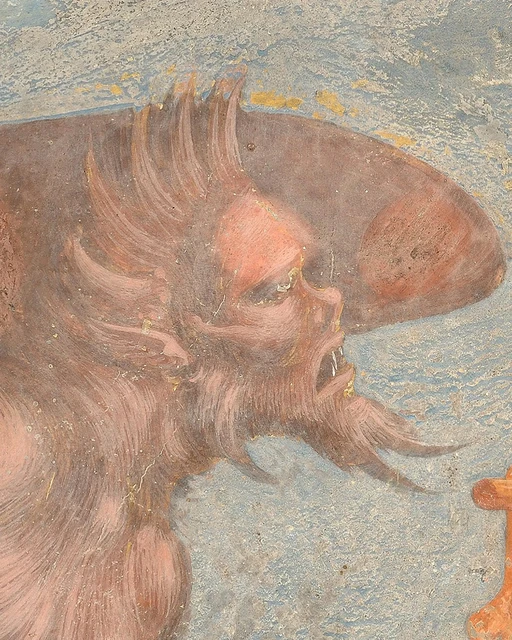
In the Expulsion of the Demons from Arezzo, the demons’ faces are designed to be instantly recognisable and visually arresting.
Their eyes are wide open and often uneven, with strongly defined pupils that give them an unsettling stare. Their mouths gape open, sometimes distorted into unnatural shapes.
Their features are reduced to a few essential elements, drawn with hard, angular lines. Some of the faces appear almost scratched into the painted surface, formed from quick, incisive marks.
It is precisely this economy of means that makes the demonic faces so effective. Just a few marks are enough to set them completely apart from the human figures and give them the unmistakable appearance of monstrous, bestial creatures.
Greccio: singing faces
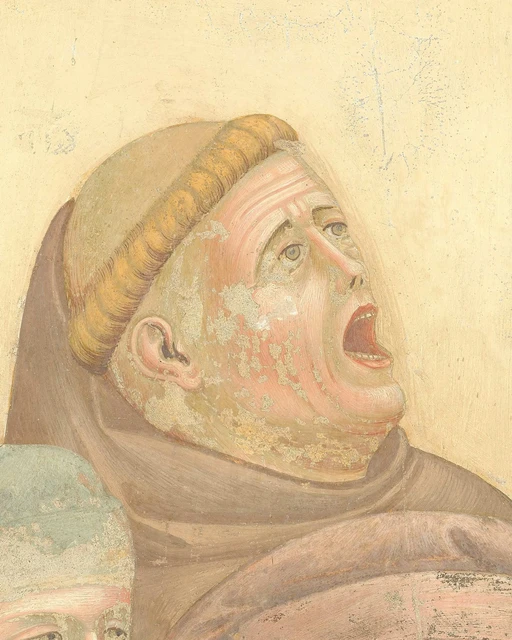
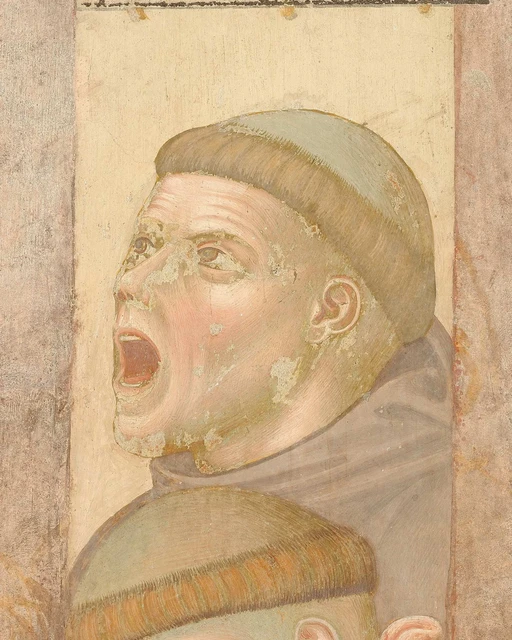
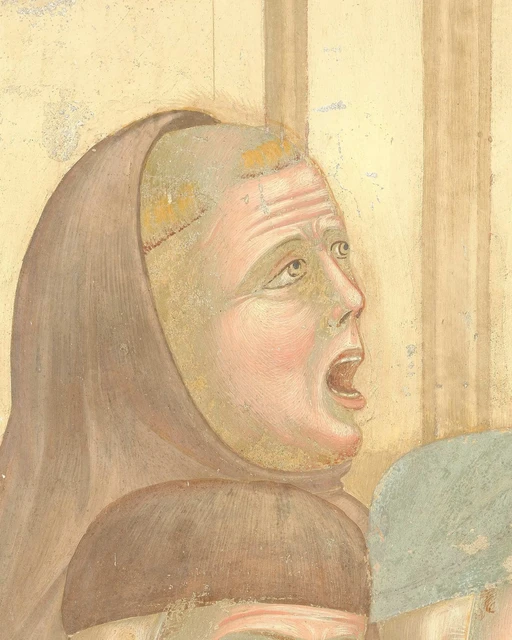
In the Institution of the Crib at Greccio, the friars’ faces give visible form to their singing.
Their mouths are opened wide, their lips stretched as they sing. Seen up close, the creases around the mouth and at the corners of the lips become clearly visible, capturing the physical effort of singing.
Here, Giotto achieves something remarkable: a silent medium is made to suggest sound. We cannot hear the singing, but the expressions on the friars’ faces make it immediately recognisable.
Together, their faces create a visual rhythm. The subtle variations from one figure to the next make the collective act of singing feel convincing, as though it were unfolding over time.
Honorius III: the face of authority
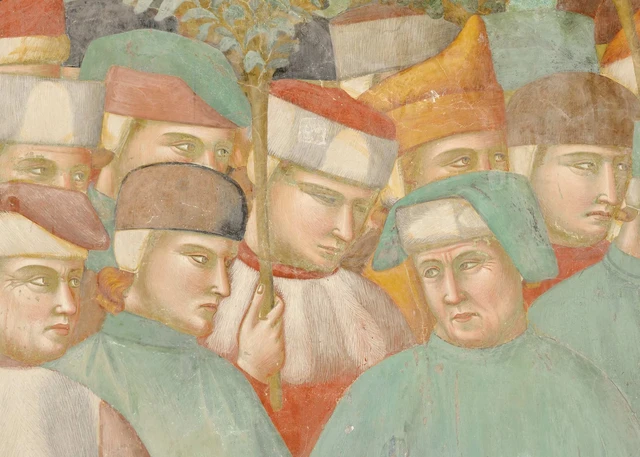
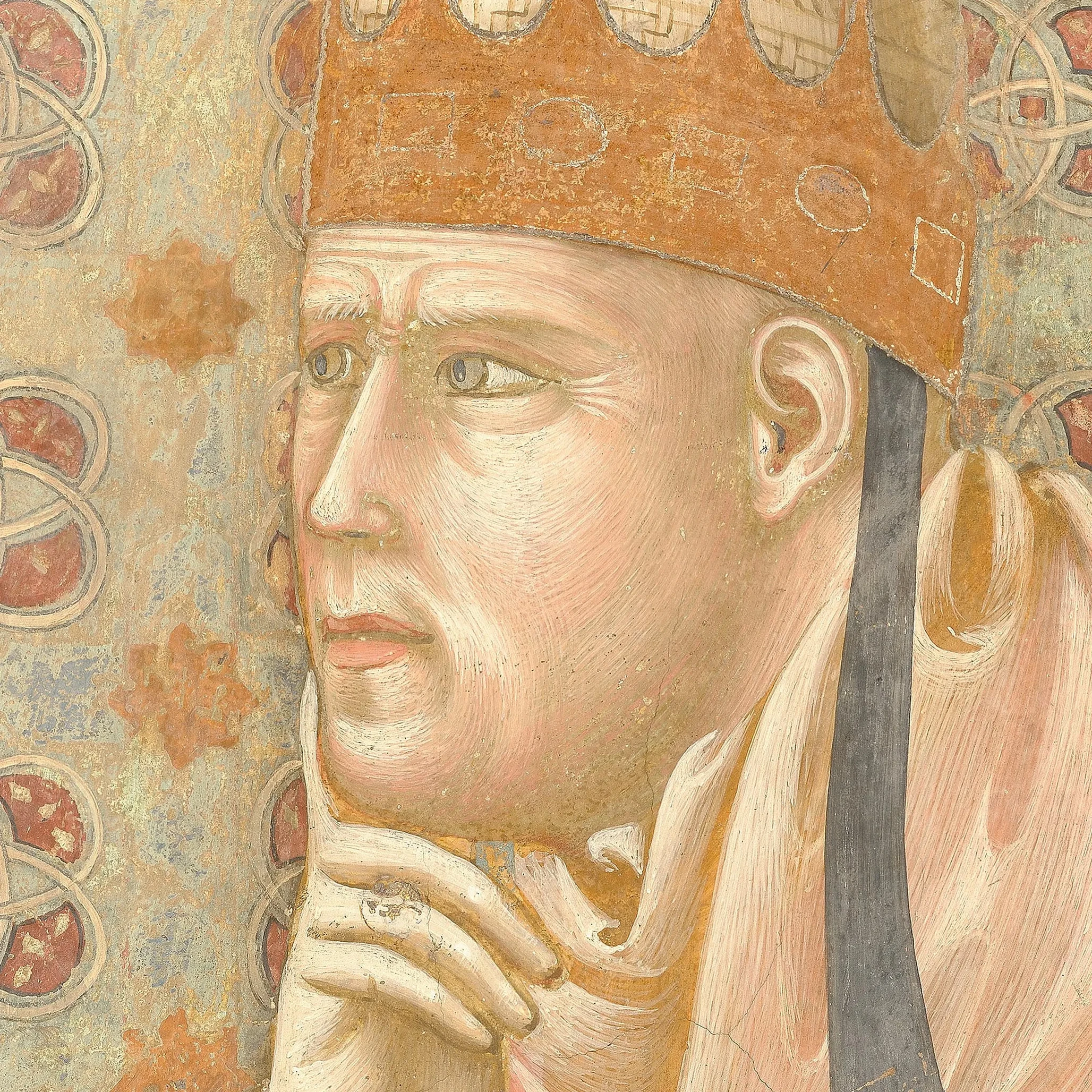
In Saint Francis Preaching before Honorius III, the Pope is completely absorbed in listening.
Honorius sits with his head resting on his hand, his eyes fixed on Francis. His expression is one of intense concentration, as though he were following every word.
Around him sit members of the papal court, recognisable by their dress. Their expressions are restrained and controlled. With closed mouths and attentive eyes, each figure listens in a slightly different way.
The scene depends on this shared attention. The Pope receives Francis’s words, while the prelates follow them closely. The sermon takes shape through this network of gazes converging on Francis.
Stigmatisation of Saint Francis: the face of concentration
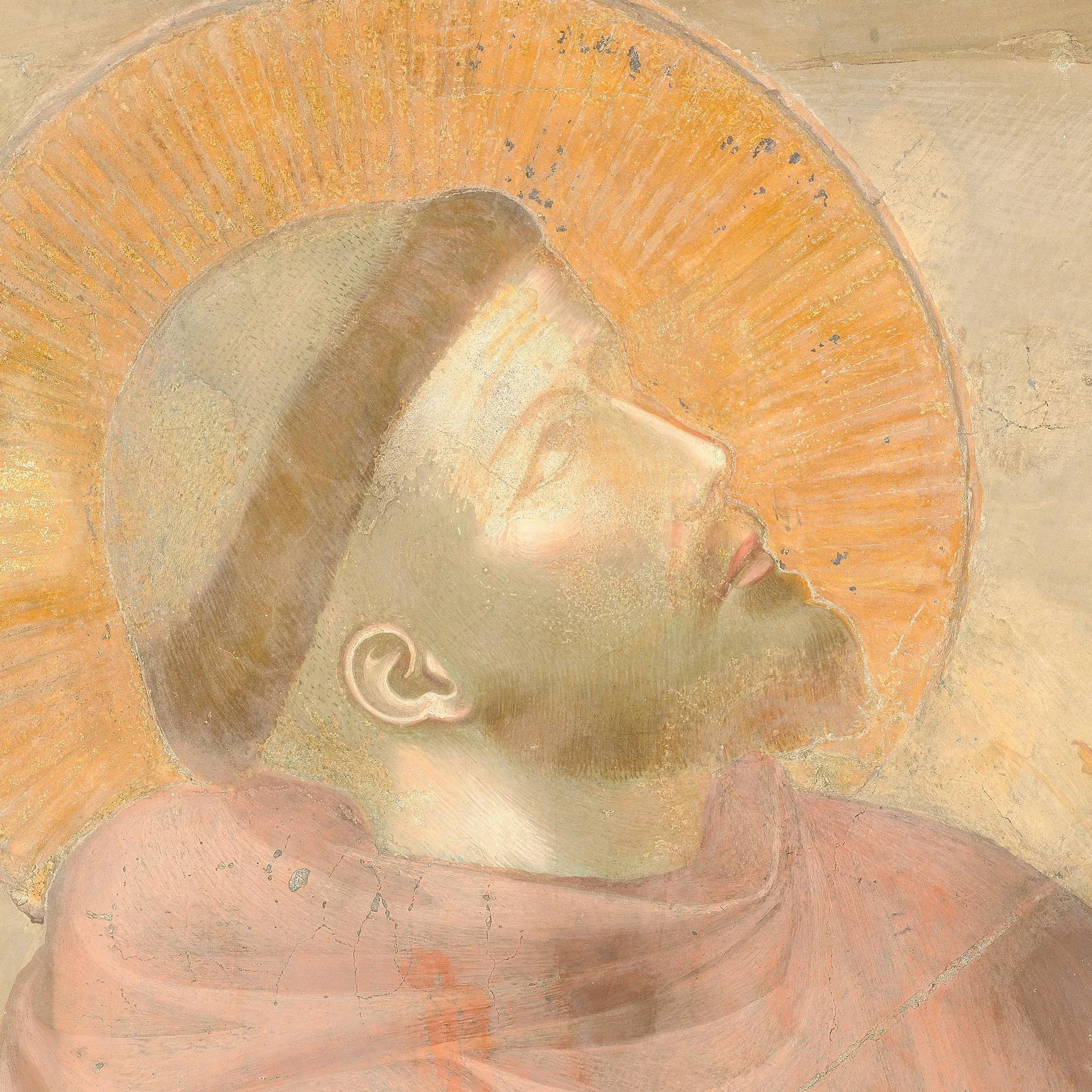
In the Stigmatisation of Saint Francis, Francis raises his face towards the figure above.
His eyes remain fixed on the seraph, holding its gaze with unwavering attention. His expression is composed, with no visible sign of strain.
What is striking is precisely this stillness and concentration. Even as something extraordinary takes place, his expression remains unchanged.
Devotion becomes visible through the intensity of his gaze. Everything is concentrated there, in the way his eyes remain fixed on what he sees before him.
Death and Ascension of Saint Francis: faces gathered around the body
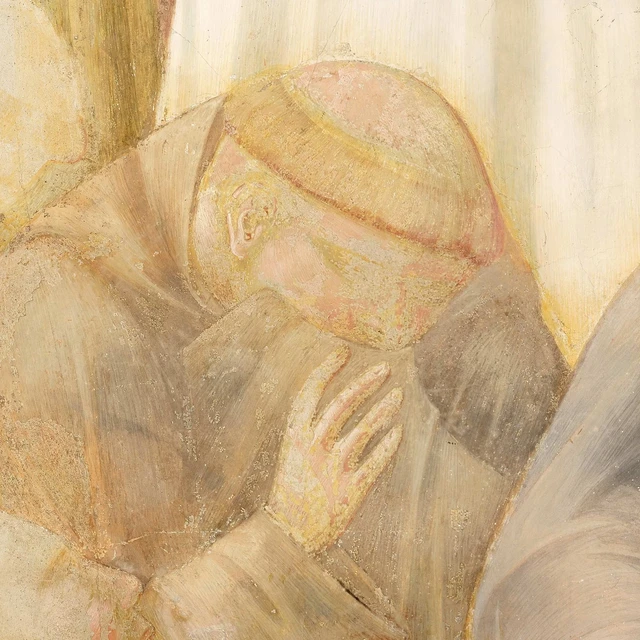
In the Death of Saint Francis, most gazes converge on the saint’s body.
Their attention is drawn to his wounds, his hands and his face. Some friars lower their gaze, others bend closer to examine the Stigmata or kiss them. Sorrow runs through the entire scene, but finds a different expression in each face. One friar in the group on the left stands out in particular, his features marked by a grief so intense that it seems almost physical.
Another friar in the same group raises his head and looks upwards. Following his gaze leads us to the upper part of the scene, where Francis is being carried to heaven by angels.
Among the clouds, however, a barely visible profile also emerges: a demonic face hidden between the earthly scene below and the heavenly realm above.
Saint Francis Mourned by St Clare: restrained grief
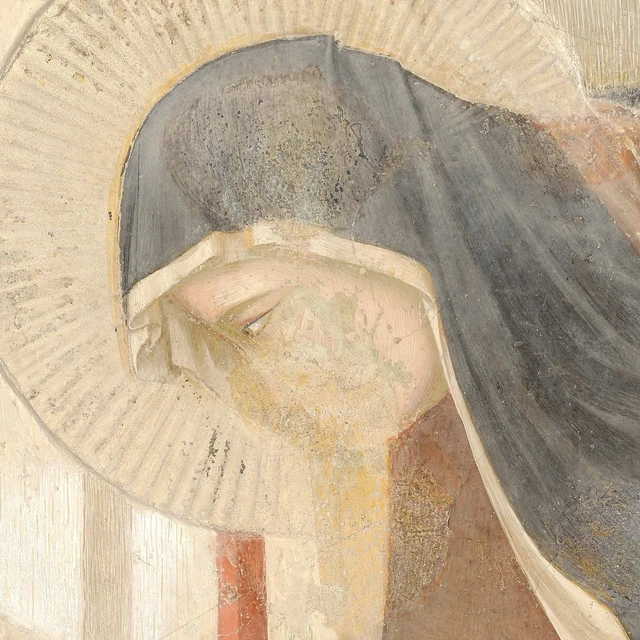
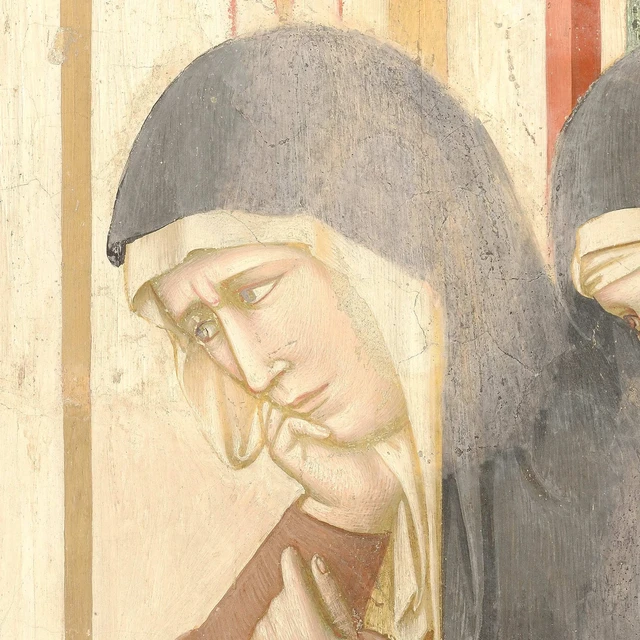
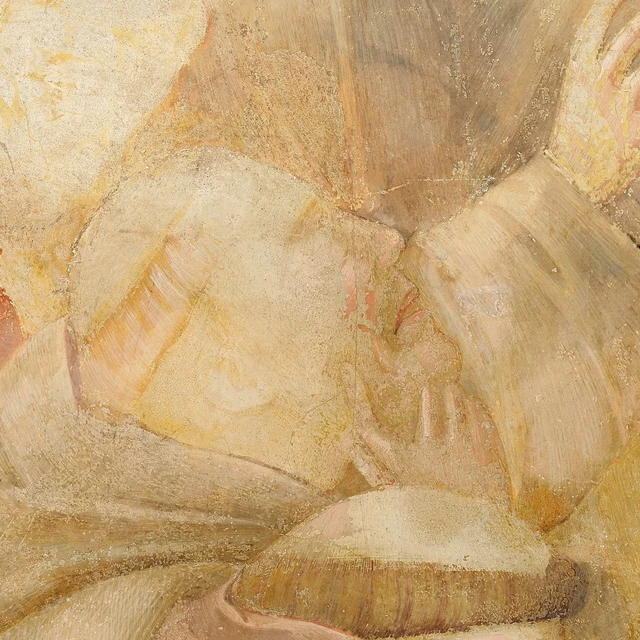
In Saint Francis Mourned by St Clare, the faces gather closely around Francis’s body, forming a compact group beside the bier.
Clare bends over him and gently lifts his head. Her expression conveys an intimate and deeply personal grief. The Poor Clares gather around her: one kisses Francis’s hand, while others emerge from the church with sorrowful expressions.
Their faces are marked by grief, their eyes lowered. The emotion is conveyed through subtle details: slightly lowered eyelids and pronounced lines around the mouth.
The group of onlookers on the left shares the same mood of devotion and quiet contemplation. This is grief without outcry, deeply felt but silently expressed.
No single face dominates the scene. Together, they create a shared atmosphere of mourning, in which gestures and glances reveal the depth of the figures’ bond with Francis.